CHILE
Inpired by the Peruvian law, Chile is promoting a Bill for the Protection of Breaks Suitable for Sporting Activities.
Likewise, the efforts of the Chilean community for the protection of surf breaks have become visible in emblematic cases. First, during the creation of the Piedra del Viento and Topocalma Coastal Marine Sanctuary, the breakers suitable for sports practice were included as objects of conservation of the marine protected area. This is the first time that breakers have been legally recognized as objects of protection.
Secod, the efforts of the Pichilemu community have resulted in the creation of the Punta de Lobos Park, adjacetn to the famous world-class breakers. This guarantees its protection, as well as free and open access in perpetuity, through its own conservation model. In addition, the regulatory plan of the area was modified in order to protect the area, which restricts the permitted land uses.

CHILE
1/
DRAFT BILL ON SURF BREAKS SUITABLE FOR SPORTING ACTIVITIES
Inspired by the Peruvian surf breaks law, Chile has been seeking to enact itsown Protection Law for Surf Breaks Suitable for Sporting Activities. In 2018, the Arica Surfing Association, sponsored by the senator from that region, submitted this draft to the National Confress. Subsequently, various civil society organizations (Arica Surf Association, the Rompientes Foundation, the Punta de Lobos Foundation, Parley and the Chilean Surfing Federation, among other relevant actors) have promoted this initiative.
The draft bill seeks to protect both the physical components that shape the surf break and make it operational (seabed topography, swell window, and sedimentation processes, among others) and the qualities of the wave that make it suitable for sporting practices (such as access to the waters and their quality).
The bill passed its first legislative procedure when it was approved by the Seante in 2023. In April 2025, the Chamber of Deputies approved the draft for the protection of surf breaks. The next step is approval by a mixed commision.
Additionally, the MInistry of Sports, which is evaluationg the legal text, has considered extending the scope of the law to protect other places (such as rivers, lakes, and mountains) where outdoors sports are also practiced. The proposal is to determine a procedure that recognizes, through a governmental decree, the surf break (and eventually other natural places) as areas of public interes and natural sport spaces that must be preserved, creating legal effects for both their protection and promotion.
2/
SURF BREAKS AND PROTECTED AREAS
The purpose of protected areas is to ensure biodiversity conservation, as well as the protection of natural and cultural heritage and landscape value. In the process of establishing certain marine protected areas, such as the Piedra del Viento and Topocalma Coastal Marine Snactuary, it has been possible to recognize the existence of surf breaks suitable for sporting activities as an accessory or additional conservation objective.
In 2023, a law that created the Biodiversity and Protected Areas Service (SBAP) was approved in Chile. This is a public service responsible for leading biodiversity conservation in Chile. This strengthened the Chilean environmental institutional framework, which since the approval of Law 20.417 in 2010, created the Ministry of Environment, the Superintendence of the Environment, and the Environmental Evaluation Service.
The law that created the SBAP also established a single National System of Protected Areas (SNAP), comprisin all existing protected areas in CHile, both marine and terrestial, public or private. This sought to resolve administrative dispersion and integrate the protected areas under the same system (the SBAP). Additionally, it standardized the protected areas in Chile with the protected area management categories recommended by the International Union for Conservation of Nature (IUCN).
2.1. COASTAL-MARINE SANCTUARY PIEDRA DEL VIENTO Y TOPOCALMA
The category of protected area "nature sanctuary", which existed before the integration of different types of protected areas and their harmonization with IUCN criteria, was ideal for protectiong surf breaks within the Marine-Coastal Sanctuary Piedra del Viento and Topocalma. This category allowed the protected area to include the coastal zone beyond the public beach, that is, beyond the highest tide line. This would safeguar the physical components of the surf breaks, such as sand dunes, which influence the sedimentation processes shaping the waves. Recreational purposes were also allowed in the nature sanctuaries, in addition to conservation purposes, so that sports activities could be promoted in a regulated manner.
In this context, in 2019, the Rompientes Foundation, in coordination with the Union of Artisan Fishermen of Topocalma and the Federation of Artisan Fishermen Unions in the Province of Cardenal Caro, submitted the declaration of Topocalma beach as a nature sanctuary to the Chilean Ministry of Environment . Two years later, in 2021, through Supreme Decree 10 of the Ministry of Environment, the Coastal-Marine Sanctuary Piedra del Viento and Topocalma was created.
This decree included the following environmental conservation objects under official protection of the sanctuary:
Topocalma wetland
The marine-coastal biodiversity
The dunes
The coastal edge
Traditional artisanal fishing and seaweed gathering practices
The surf breaks suitable for sport fishing
In this way, for the first time in Chile, surf breaks suitable for sport were protected. Furthermore, it not only protects the waves, but also seeks to protect social, cultural, and environmental aspects that are key components of a "surfing ecosystem".
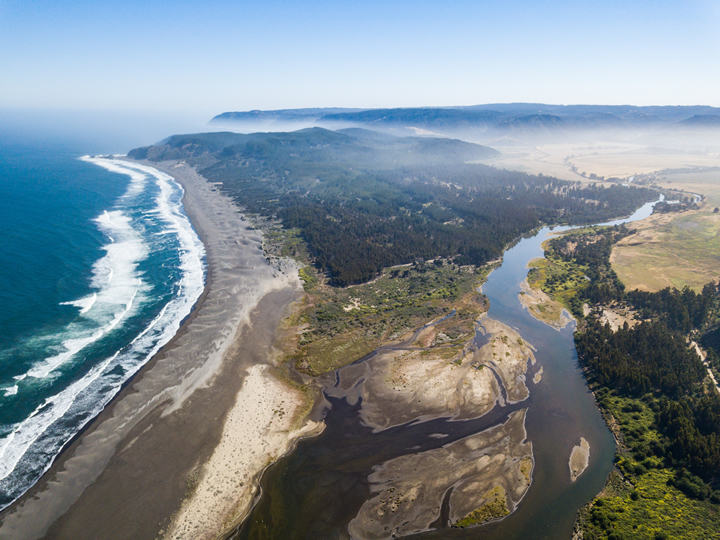
The Coastal-Marine Sanctuary Piedra del Viento y Topocalma is home to six protected surf breaks. With this historic milestone, for the first time, there is official recognition and protection of waves for sport, and it opens the door towards the protection of other Chilean surf breaks. Photo: José Gerstle.
2.2. SURF BREAKS IN OTHER PROTECTED AREAS
In some cases, although the waves have not been directly and officially recognized as objects of conservation in the preotected areas, they are indirectly protected because they are located within these areas.
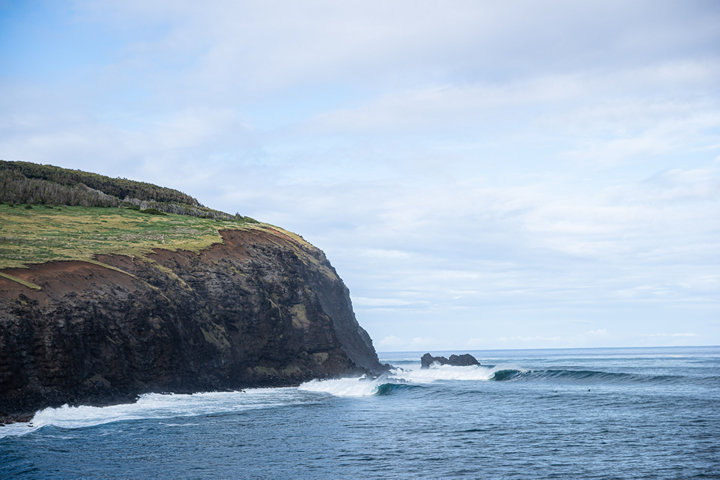
Rapa Nui National Park, located on the island of the same name, is not only home to ancestral ceremonial villages and the famous petroglyphs of the ancient natives, but also to surf breaks of national importance. Photo: Rodrigo Farías.
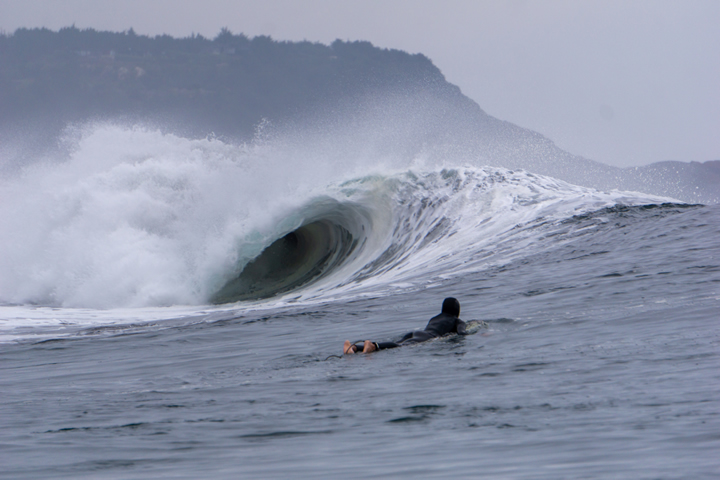
The Nature Sanctuary Bosque de Calabacillo de Navidad, located in the O'Higgins region, corresponds to a portion of water and seabed adjacent to the beach, characterized by high biodiversity associated with the unique forest of brown macroalgae Macrocystis pyrifera (calabacillo). As food for herbivores and mollusks, the calabacillo is fundamental to the conservation of the forest's biological diversity. The protected area includes a famous surf break in the area, a high-level left tube known as Roca Cuadrada. Photo: Agustín Sierra.
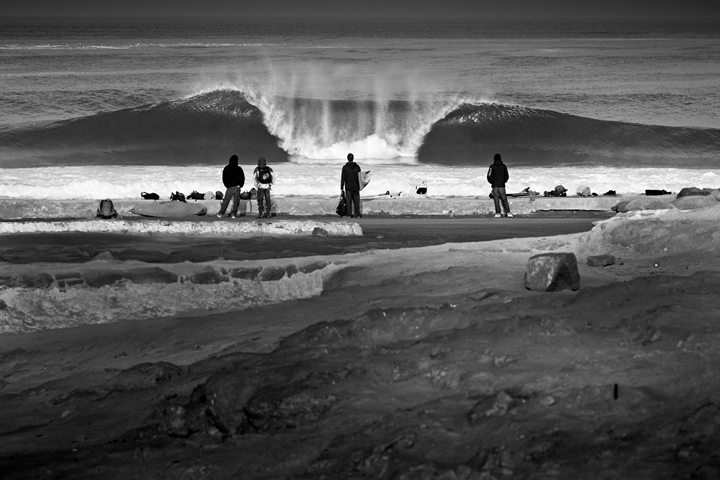
Next to the National Monument Isla del Alacrán, located in the region of Arica, is the famous wave El Gringo, locally known as Flopos. This is another case of a wave indirectly protected because of its location within another protected area. It has been argued that since the island is protected as a national monument, so is its seabed, which shapes the surf break. In other words, while the wave is not protected, its surroundings and access to it are. Photo: Diego Figueroa.
3/
SURF BREAKS IN MARINE-COASTAL ZONE MANAGEMENT PLANS
Land use in Chile varies depending on whether the areas are urban or rural.
In urban areas, planning is carried out at three levels: nationa, intercommunal and communal. At the national level, the Ministry of Housing and Urban Development is responsible for urban development planning. At the intercommunal level, the main actors are the regional secretariats of the Ministry of Housing and Urbanism. At the communal level, the corresponding municipalities are the primary authorities responsible for designing the instruments.
According to the General Ordinance of the General Law of Urbanism and Constructions, the territorial planning instruments of urban areas must recognize areas of protection of resources of natural value, as well as define or recognize areas of protection of resources of cultural heritage value. Along these lines, waves could be included in urban territorial planning instruments, eventually as resources of natural or cultural value.
In rural areas, the territorial planning instruments correspond to the regional territorial management plans (PROT), which are developed and approved by the Regional Government of each region of the country. The Regional Governments must also propose and approve the Coastal Border Zoning (CBZ) projects for their region. Once approved by the Regional Governments, the CBZ projects must be approved by the MInistry of Defense and recognized in the respective PROT.
3.1. COASTAL EDGE ZONING PROJECT FOR THE O'HIGGINS REGION
The Regional Government of O'Higgings approved the CBZ project of tis region in 2019, through Regional Council agreement 6253. The CBZ is not yet in force, since the Regional Government is currently resolving the observations made by the Undersecretariat for the Armed Forces.
The progress achieved to date has been the result of participatory work that has incorporated the views of different interest and public and private actors, such as politicians, civil society, the National Tourism Service, and the Ministry of the Environment. Additionally, the opinions of surfers and organization such as the Rompientes Foundation and the Punta de Lobos Foundation have been considered, which has madre it possible to draw up a list of the surf breaks suitable for sport in the region. The objetive is that th O'Higgings CBZ expressly recognizes each nautical sport zone within the areas of preferential uses on the coast of the region, and, specifically, surf break protection zones.
In the first coastal edge report for the proposal of the O'Higgins region CBZ, the Nautical Sports Zone has been defined as "a maritime strio of one mile offshore and the beach lands, which corresponds to the sectors that present optimal conditions for the development of non-polluting nautical sports (surfing, windsurfing, kitesurfing and others), sun and beach tourism and recreational fishing." The objective of this delimitation is to "give relevane to this type of zone for the development potential and economic and social benefits that can be obtained ffrom them", as well as "to protect the unique natural conditions that allow the practice of nautical sports of international level and recreational tourism."
Additionally, in 2020 the Strategic Environmental Assessment (SEA) of the O'Higgins region CBZ was completed, which allowed local authorities to value and make visible natural elements of relevance for the territory and the community. Among these elements are the dunes that act as natural shelter against tsunamis and also as a source of biodiversity; the paleontogical elemetns as heritage potential in the coastal edge; the geological elements of the edge that condition large waves; the wetlands and the marine and terrestial ecosystems that are in fragil condition and are considered vary valuable by the community.
4/
VOLUNTARY CONSERVATION INITIATIVES BY CIVIL SOCIETY
Chile has a strong voluntary conservation movement promoted by civil society organizations. Organizations and individuals have decided to purchase land for conservation in different parts of the country, especially in Chilean Patagonia. An iconic case of wave protection in Chile, where voluntary conservation tools have been used, is that of Punta de Lobos Park, Pichilemu, home to the famous world-class surf break.
4.1. PUNTA THE LOBOS PARK
This park is a conservation project born from the need to protect this place from two invasive real estate projects, approved in 2013, which were intended to be located on the land and cliffs of Punta de Lobos.
In early 2014 with the support of the international organization Save The Waves Coalition, the Committee for the Defense of Punta de Lobos was formed. This committee suceeded in making a modification to the existing regulatory plan so that the land adjacent to the sea would be considered as "gree areas," which restricted the permitted uses.
By the end of 2017, through philanthropic actions and collaborative work, the Punta de Lobos Foundation managed to raise funds to acquire the property of Mirador de Punta de Lobos, thereby guaranteeing its protection and free access in perpetuity. Punta de Lobos Park has been recognized aas a World Surfing Reserve by Save The Waves.
The conservation model is based on the voluntary implementation of a real right of conservation (RRC). By virtue of this, the Punta de Lobos Park Corporation, owner of the property, establishes a series of voluntary obligations and porhibitions on the property of the park in favor of the holder or guarantor of the RRC, which in this case is the Punta de Lobos Foundation. Thus, this foundation can demand compliance with the obligations and prohibitions, even if the property is donated or sold in the future.
The Punta de Lobos Park Corporation assumes the responsibility to manage and administer the Punta de Lobos Park in line with what is defined in conjuction with the Punta de Lobos Foundation, within the management plan and within the framework of what is allowed in the RRC. The Punta de Lobos Foundation must supervise and evaluate compliance with the RRC and the management plan, which in turn must be previously approved by the foundation.
The fact that the owner is a non-profit legal entity formed by a froup of people allow for robust governance and greater legal protection in the long term. There is a periodic incorporation of partners (both natural and legal persons) that take part in the decision-making process through General Assemblies. This not only allows the inclusion and participation of the local community in the management of the park, but also promotes the financial sustainability of the conservation model in perpetuity through the contributions made by the members through fee payments.
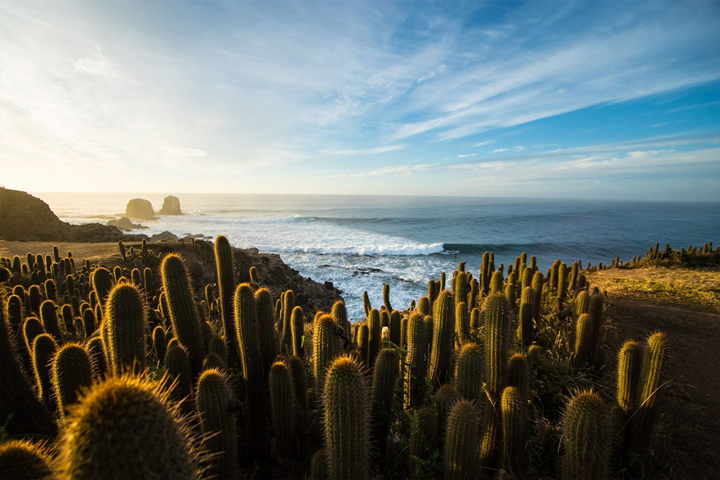
Punta de Lobos Park, with more than 600,000 visitors a year, is a 2.2-hectare space that borders the Pacific Ocean at Punta de Lobos, where powerful and long waves break, with impressive cliffs behind, filled with sclerophyllous vegetation native to the central zone. Its purpose is implementing a conservation and restoration project along with the community, oriented to the restoration of marine and land biodiversity, the promotion of traditional activities and the development of local economies allowing for sustainability. Photo: Rodrigo Farías.
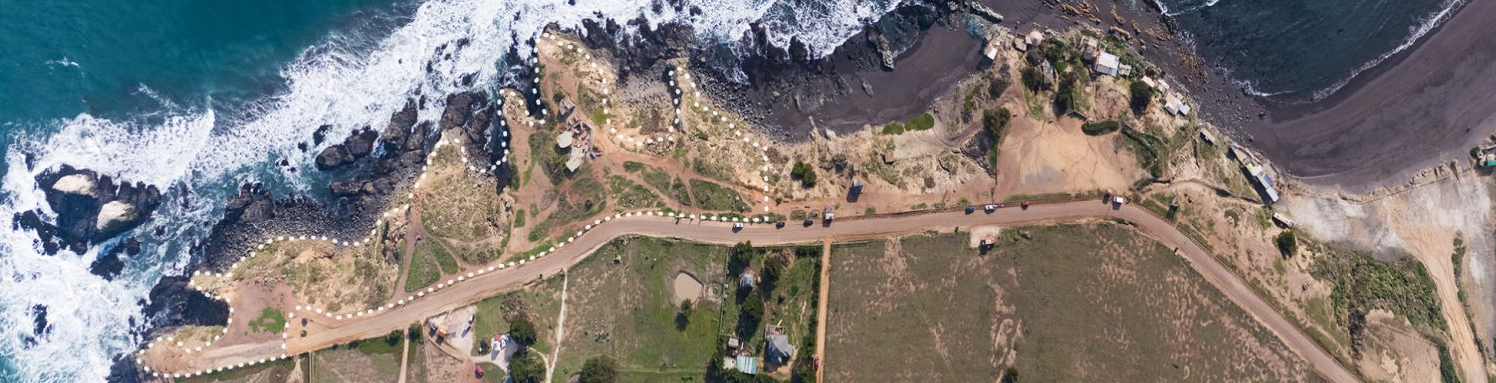
Pichilemu's regulatory plan was modified in 2016, with the incorporation of Zone E1, to preserve the surrounding area of Punta de Lobos. Thus, the cliffs and their vegetation are located inside Zone E1 Parque Comunal Punta de Lobos (green areas); with this, it limits the land use to the practice of sports associated with surfing (and other nautical sports), and establishes limitations to real estate development. Photo: puntadelobos.org.
5/
CONSIDERATION OF WAVES IN PUBLIC WORKS
In Chille, the Ministry of Public Works (MOP), through the Dirección de Obras Portuarias (DOP), is the authority responsible for the following:
Supervise and approve studies, projects, consructions, imporvements, and extensions of all maritime port works, and dredging of ports and waterways that are carried out by individuals or by entitites where national agencies have participation
Carry out studies, projects, constructions, and expansion of fundamental and complementary works of the ports, docks and piers that are built by the State or with its contribution. It may also carry out repairs and maintenance of port works and dredging of ports and waterways.
Although there is no regulation that requires the official recognition of surf breaks suitable for sports, the DOP may consider, in practice, the existencce of waves if they have important value for the surrounding communities. The authority has suggested the need to generate a regustry of the areas where surf break suitable for sports practice are generated, so that they can be incorporated into the internal project review procedure.
In practice, there are a series of cases where the DOP has evaluated wave behavior for sports practice, so that coastal infrastructure does not generate alterations in the swell.
For example, in 1997, a law was passed to modernize the public port sector, which led to the need to relocate the fishermen's cove in Atica. It was determined that in the place where the new cove would be located, it was necessary to build a series of breakwaters to attenuate the swell and generate a "calm water" zone. There is a wave called El Rancio, very good for bodyboarding. Numerical modelin studies were carried out to determine whether or not this new breakwater projected for the future fishing cove would affect El Rancio. Finally, it was determined that the new infrastructure would not generate changes in wave height.
In another project, improvements were sought for El Laucho beach in Arica. Surfers protested strongly about the impac that the work would have on the wave El Buey. A mathematical model had to be developed to show that the breaker would not affect the wave. However, this was not enough, and at the request of the authorities, another physical model was built, which showed that the work would not have any impact on El Buey or El Gringo, since it was located at a sufficient distance. With this, the community and sportsmen alleviated their concerns.
Finally, also in Arica, a new structure was designed on the Península del Alacrán,, which has been declared a national monument. This design was made in conjunction with water sports organizations, in several working meetings with surfers, so that the structure would not affect the wave El Gringo. They even included seating for sport contemplation.
6/
PUBLIC ACCESS
In Chile, beaches are public property and are defined as the extension of land that the waves alternately bathe and vacate as far as they reach at the highest tides (articles 589 and 594 of the Civil Code). In other words, up to the line of the highest tide, the beach is public, so that its ownership and use belong to all the inhabitants of the Nation.
Article 13 of Decree Law1939 establishes that, for tourism and fishing purposes, the owners of land adjacent to sea beaches, rivers or lakes must provide free access to them when there are no other public roads or paths. The owner, lessee, holder or occupant of the adjoining land may not close or obstruct these roads in any way. In case of contravention, the offender shall be punished with a fine.
Furthermore, the law states that, when an obstruction to access a beach is verified, it can be reported to the Ministry of National Assets, which will check on the ground whether or not it is appropriate to intervene, and eventually set access routes in collaboration with the regional governments. If appropriate, the Ministry of National Assets will offer its good offices to mediate between the actors involved (municipalities, private parties, regional governments) to find a satisfactory solution.
In practice, however, loopholes in the previous regulations have generated difficulties in their successful implementation. For example, by not defining what exactly is meant by a public road or path, public access may be considered to exist even if it is in poor condition, or if the pedestrian walkway is located at a considerable distance from the beach to which access is sought. In practice, this could make the right of effective access impossible.
An emblematic case is that of Topocalma beach, where excellent surf breaks are located for surfing and windsurfing. In 2013, by Resolution 1808, and at the request of the adjoining private owner, the historic road (established since 1984) to access that beach was modified to build a new access road that negatively affected the daily life and work of fishermen, tourists and local people. The historical road was usually used by fishermen to travel to and from the Pacific Ocean. The new road meant that they had to travel more than 20 additional kilometers to the previous route. The 2013 road was of no benefit to the fishermen, as their fishing area was at the other end of the beach.
The Federation of Artisanal Fishermen Unions of Cardenal Caro, the Union of Independent Workers of Artisanal Fishermen of Topocalma, the neighborhood boards of the sector, the Puertecillo Surf Club and other individuals made a presentation to the regional authority (Intendencia) to request the reopening of the historic access to Topocalma beach and revoke Resolution 1808 of 2013. They alleged that the true and only reason for the modification of the road was that it did not cross the ranch at the point where it previously did, since there was the intention to develop a real estate project in that sector.
Finally, Resolution 484 of 2017 reopened the historic road, established since 1984. Then, in 2018, first the Court of Appeals of Rancagua, and then the Supreme Court, confirmed the administrative decision to reopen the historic access to Topocalma beach. They considered that the administrative act, i.e., Resolution 484, sought to satisfy the general good of the community that requested it, for greater social convenience, by adapting the pertinent authorizations to the road to be used. Although the historic access was established and reopened for tourist and fishing purposes, the ruling also allowed the access to the emblematic surf breaks suitable for sporting activities to be established, which has been maintained to date.
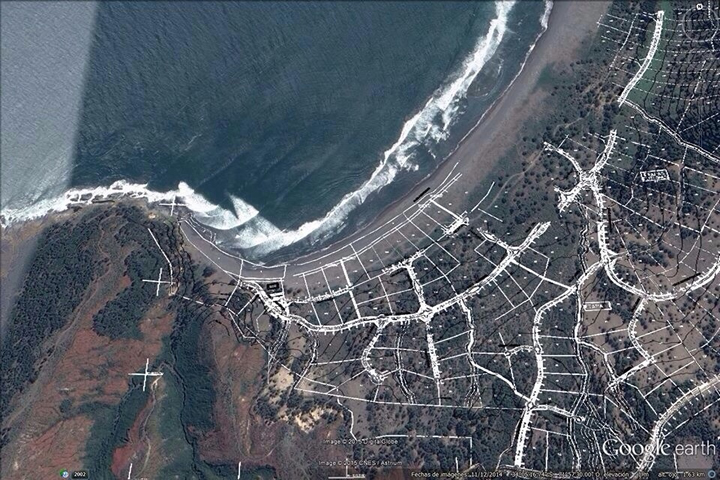
To access Puertecillo, one of the highest quality waves in Chile, one must pass through a private condominium. The real estate project has limited access to the surf break, which generates impacts on the local marine-coastal biodiversity, and has affected the sand dunes, which contribute to sedimentation processes on which the functioning of the break depends. Due to a Supreme Court ruling in 2022, the continuity of the real estate project depends on the decision of the Environmental Qualification Resolution issued by the Environmental Evaluation Service, after the completion of the environmental impact assessment process. Photo: Surf Beats Radio.
7/
CONTAMINACIÓN MARINO-COSTERA
In Chile, Decree 90 establishes the emission standard for the regulation of pollutants associated with liquid waste discharges to marine and continental surface waters, and establishes the maximum concentration of pollutants allowed for liquid waste discharged by emitting sources to marine waters. For this purpose, a "coastal protection zone" has been established and defined: this is the territorial scope of application of the regulation, which corresponds to a strip of beach, water and seabed adjacent to the coast.
The Draft Law for the Protection of Surf Breaks has incorporated water quality as an element that makes the surf break suitable for the practice of the sport, and which must be protected.
Chile is not spared from serious pollution cases. Civil society has taken initiatives to demand that the authorities take measures to prevent and mitigate the damage caused.
In the communes of Quintero and Puchuncaví, in Chile, there are several companies operating in the industrial zone, which have caused serious deterioration of the beach due, for example, to contamination from dumping. In 2021, the "most dangerous surfing" championship was held in the area, called El Sacrificio: seven renowned Chilean surfers participated in a tournament that took place in the middle of large pipes embedded in the sea, coal debris, chemicals from companies and volatile toxic gases. With this event they tried to make visible the message "NO + Sacrifice Zones," and demanded the closure of the thermoelectric plants of Quintero-Puchuncaví. Video: Greenpeace Chile (2021).
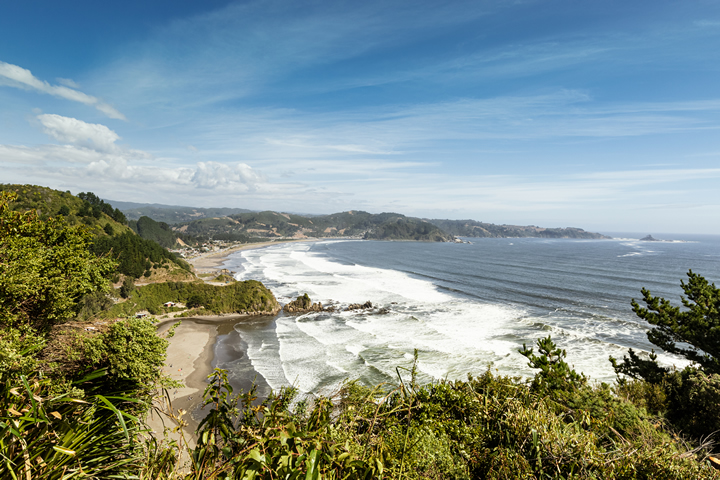
In Mehuín, in southern Chile, there is a famous wave called La Barra, seriously threatened. Since 1996, the powerful company Celulosa Arauco has been negotiating to install a pipeline that will allow it to dump the polluting waste from its paper mill on the beach of Mehuín, which puts artisanal fishermen, local Mapuche communities, and surfers at risk. The company has been dumping its waste in the Las Cruces River, near the surf break, and in doing so has caused, among other damages, the death of thousands of black-necked swans. The company is now seeking to influence the authorities to increase the allowable concentration of chemicals and heavy metals. The locals are committed to the protection of Mehuín. Photo: Juan Carlos Elgueta.
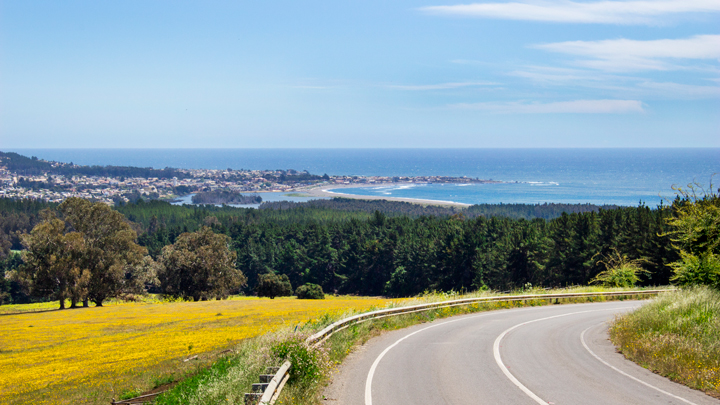
The Pichilemu marine outfall was a failed project of the sanitation company ESSBIO, which sought to evacuate sewage from the city of Pichilemu to the sea, and which, because of its environmental impact, received strong resistance from the community. Finally, in 2007, the project was stopped and replaced by a treatment plant for Pichilemu. Photo: visitapichilemu.cl.