COSTA RICA
Although there is no specific legislation for the protection of waves, Costa Rica has been an example at the international level in promoting surfing in tourism. In 2019, it enacted a law declaring the practice and development of surfing to be of public interest, whicha was considered an activity of tourist, economic and sporting importance. Likewise, Costa Rica created the National Surfing Day.
The country has legal tools and conservation madilities that can be used for the protection of waves in general. In Costa Rica, public access to beaches is guaranteed by law, infrastructure projects must have environmental impact assessments, and the system of protected areas includes management plans that can be used fro wave protection adn, in some cases, even encourange surfing

COSTA RICA
1/
GENERAL RULES FOR THE PROTECTION OF SURF BREAKS
Although the current Costa Rican legal framework has general regulations that ensure public access to beaches, it does not have specific provisions for the protection of waves and breakers. The importance of surfing in Costa Rica is such that the need to create specific regulations for wave protection has been recognized. It has been recommended that such regulations, of legal rank, establish both the obligation to register the sites identified as key for surfing practice (and other related activities) and monitoring mechanisms on the state of the waves to ensure the integrity of the ecosystems, and the inclusion of sanctions for those who damage their integrity.
In 2019, Law 9737 was enacted, which designated National Surfing Day and declared the practice and development of surfing to be of public interest as an activity of tourist, economic and sporting importance in Costa Rica. This law recognizes the importance that surfing has in the country (especially in the economy of coastal areas) and seeks to enhance its development.
By virtue of Law 7800/1998, the Institute of Sports and Recreation (ICODER) is the entity in charge of overseeing and promoting surfing and creating the infrastructure for its practice. The Ministry of Environment and Energy (under Directive 10-2020) has the authority to establish the guidelines for the conservation of coastal and marine ecosystems, which includes surf breakers.
2/
BREAKERS AND ENVIRONMENTAL IMPACT ASSESSMENTS
Law 7554/1995, Organic Law of the Environment, establishes general measures for sustainable management of natural resources in Costa Rica. Among them, it determines that all works or projects that may have adverse impacts on the environment must be subject to an environmental impact assessment. The National Environmental Technical Secretariat is the authority in charge of conducting environmental impact assessments for any work or project that requires it.
The General Regulation on Environmental Impact Assessment Procedures (31.849) establishes thresholds to define which activities, works or projects require an environmental impact study, which means that not all assessments result in environmental impact studies. These are defined according to the environmental significance of the project (SIIA score), from which it is established whether an affidavit, an environmental management plan or an environmental impact study with the corresponding mitigation measures are required.
It also defines which environmentally fragile ecosystems must necessarily require an environmental impact study, regardless of the extent or potential impact of the work or project.
The ecosystems comprehensively listed in Annex III of the Regulation will always require environmental impact studies because they are considered environmentally fragile ecosystems, among which is the maritime-terrestrial zone.
However, this consideration does not directly protect waves, so it would be advisable to reform the Regulation to include surf breaks on the list of environmentally fragile ecosystems. On the other hand, due to the lack of oversight, projects to be developed in maritime zones, despite being listed in Annex III, do not always go through environmental impact assessments.
3/
BREAKERS AND PROTECTED AREAS
Law 7554, Organic Law of the Environment, establishes the different management categories for wild protected areas, with the purpose of promoting the conservation, adequate use and management of biodiversity in key sites. Each management category has different uses and purposes, which are defined by their management plans. Among the uses permitted (and even encouraged) in wild protected areas is ecotourism, which includes surfing when site conditions permit.
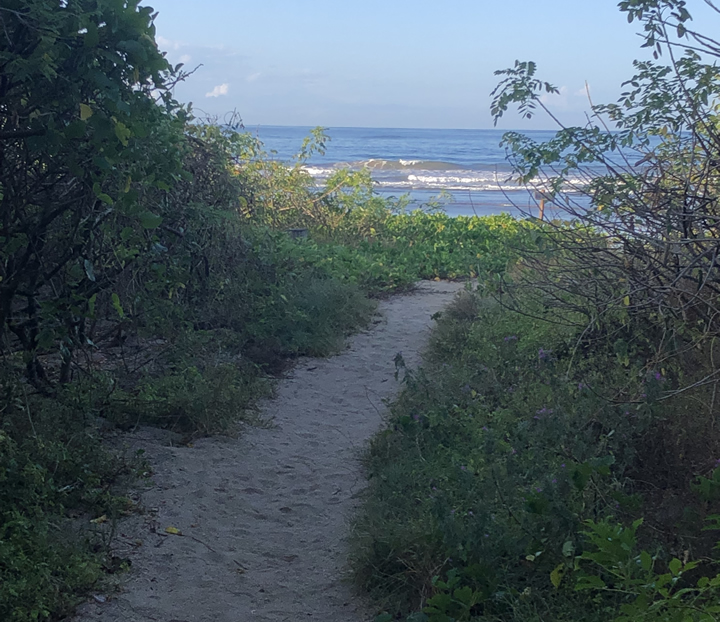
The Las Baulas Marine National Park includes surfing in its management plan as one of the permitted uses. The activity is regulated and delimited to certain areas, and a zoning is also proposed according to surfing skill levels (beginner, intermediate and advanced). Photo: Manolo Ruiz.
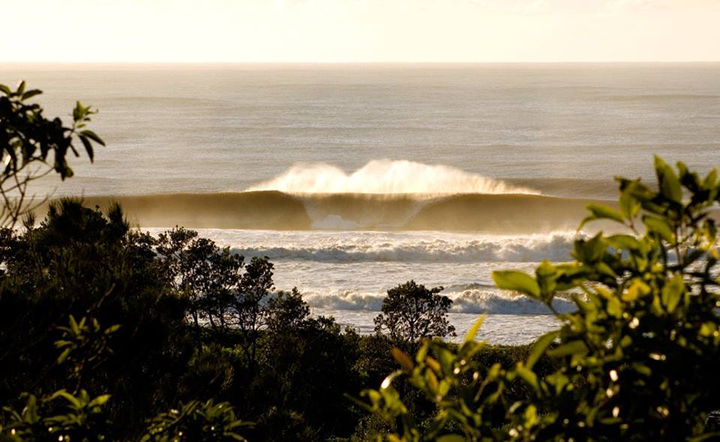
The General Management Plan for the Camaronal National Wildlife Refuge distinguishes between protection, restricted use, public use, special use, and buffer zones. In the extensive public use zones, surfing is listed as one of the expressly authorized activities. Photo: Isaac Campos.
In general, any category of marine protected area could be used for wave and breaker protection, as long as it is contemplated in the respective management plan and authorizes surfing as an activity to be carried out within the area.
According to the Biodiversity Law (art. 2), the National System of Conservation Areas is the entity in charge of managing the protected wild areas and carrying out management plans in them.
However, due to the primarily biological focus of the management categories, the specialists recommend the creation of a new protection regime, under the figure of sites of interest, for surfing and other related activities. They also recommend updating the management plans of those protected wilderness areas that contain sites identified for surfing, to include the protection of waves within their objectives.
4/
PUBLIC ACCESS
The Law 6043/1977 on the Maritime Terrestrial Zone is the main regulation in the country regarding the use and access to beaches. This law seeks to guarantee public access to all beaches in the country, with some exceptions.
The maritime-terrestrial zone is defined as the 200-meter-wide strip along the Atlantic and Pacific coasts of Costa Rica, measured from the ordinary high tide line. It is divided between the public zone, which is the 50-meter-wide strip measured from the ordinary high tide line and the areas that are uncovered during low tide, and the restricted zone, consisting of the remaining 150-meter strip.
In the public zone, the only works allowed are those that seek to ensure public access to the beach, while in the restricted zone the development of works is allowed provided they operate under a concession model. These concessions, granted by the municipalities, must first undergo an environmental impact study. In addition, they must always be granted with a view to complying with land-use plans and respecting and preserving the natural characteristics of the coastal zone. In this sense, there is high potential for incorporating surf break protection into coastal regulatory plans.
In summary, the regime of this law has sufficient conditions to guarantee public access to beaches for those who wish to practice surfing and seeks to protect its integrity. For example, ruling 04616-2004 of the Constitutional Chamber of Costa Rica obliged the Punta Leona Club Society to comply with the provisions of the Maritime Terrestrial Zone Law, and guarantee public access to the beach located on the property of the club.
The Costa Rican Tourism Institute is the authority in charge of overseeing the use and condition of the maritime- terrestrial zone, in addition to having the authority to promote, in conjunction with ICODER, surfing in the country.
For its part, the National Institute of Housing and Urbanism is responsible for approving all land use plans for coastal areas, as well as the plans for any urban development to be carried out in the restricted zone.
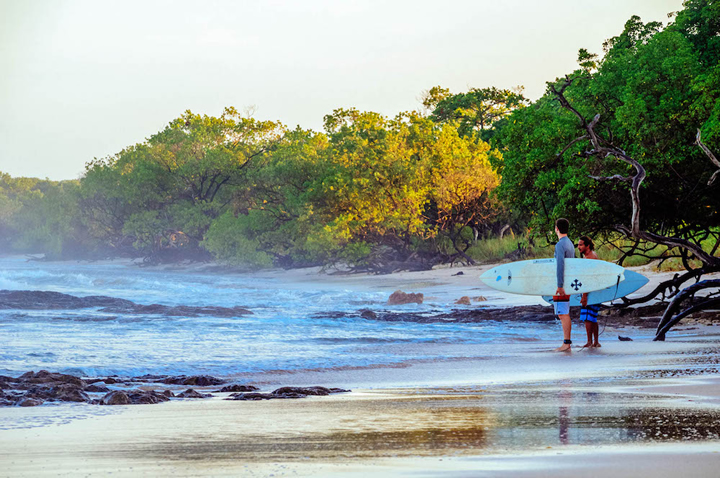
The Integral Regulatory Plan for the Avellanas Tourist Center - Junquillal (Municipality of Santa Cruz) contemplates surfing as one of the attractions of Playa Avellanas, whose mangroves are also protected as a natural zone. The territorial instrument expressly states that the development of the area "should be linked to the appropriate use of the beach area for beach sports, sport fishing, water sports, hiking, sunbathing, and relaxation; therefore, access conditions to the sectors that make up the area should be improved." Photo: nomasdsurfers.com.
5/
MARINE-COASTAL POLLUTION
The Ley de Aguas (Law 216/1942) and the Dumping and Reuse of Wastewaters Regulation (Reglamento 33601/2006) establish a series of standards and obligations for good practices regarding wastewater management, since they monitor water quality in general and can be used as instruments to minimize marine pollution.
The Ministry of Health is in charge of coordinating the Technical Committee that oversees compliance with these regulations, and of the standards for wastewater use, through the establishment of standards and monitoring of their application. Water quality standards and obligations are under constant review by this Technical Committee.
There are ongoing evaluations of current water quality, which are carried out by aqueducts and sewers, some as part of the monitoring performed by authorities at the national level, and others through the voluntary program Bandera Azul Ecológica (Ecological Blue Flag).
Legal discharges are registered through the National Water Directorate, which authorizes discharge concessions. Illegal discharges can be reported to the Ministry of Health.
Water bodies are also regulated for their protection by the Forestry Law (Law 7575).