MÉXICO
Although Mexico does not have specific regulations for the protection of surf breaks, the protection of its marine-coastal zone is regulated in other national regulations, which also cover aspects such as management plans, environmental impact assessments and public access to the coastal zone.
It's worth noting that some sourf breaks are protected because they area within state-recognized protected areas, suchas as the Playa y Arroyo San Miguel State Park (Baja California) and the Pacific Islands Biosphere Reserve of the Baja Calfornia Peninsula. In the latter, the community has promoted activities si that its management plan (pending to date) considers breaker zones within the conservation criteria.

MÉXICO
1/
GENERAL RULES FOR THE PROTECTION OF SURF BREAKS
Mexico does not have specific regulations for the protection of surf breaks, nor is there any reference to waves or surf breaks in current regulations.
The Political Constitution of the Mexican United States establishes that "national goods" are inherent to the coastal zone and that their domain corresponds to the Nation. Among these assets are all the natural resources of the continental shelf and the submarine platforms of the islands, which include "internal marine waters" (art. 27).
1.1. GENERAL LAW OF NATIONAL GOODS AND FEDERAL MARITIME-TERRESTRIAL ZONE
The General Law of National Goods recognizes maritime beaches as goods of common use (art. 3), which are parts of land that, by virtue of the tide, the water covers and uncovers, from the limits of greater ebb to the limits of greater annual flow, and the federal maritime-terrestrial zone (ZOFEMAT).
The Mexican Official Standard NOM-146-SEMARNAT-2017 (NOM) is derived from the Quality Infrastructure Law, which establishes the methodology for the preparation of plans that allow the cartographic location of the federal maritime-terrestrial zone and land reclaimed from the sea that are requested in concession. The demarcation and delimitation of ZOFEMAT corresponds to the Secretariat of Environment and Natural Resources (SEMARNAT).
When the areas have an angle of inclination of 30 degrees or less, or are coasts that lack beaches and present rocky formations or cliffs, the Secretariat will determine the federal maritime-terrestrial zone within a 20-meter strip contiguous to the marine coast. Therefore, surf breaks in these zones are more vulnerable as they are considered sites susceptible to private exploitation through the legal figure of concession. In these cases, ZOFEMAT is defined in NOM-146-SEMARNAT-2005 as "the 20-meter-wide strip of dry land, passable and contiguous to the maritime beaches or, if applicable, to the riverbanks, from the mouth of the river to the sea, up to one hundred meters upstream."
Likewise, it is possible to follow a process called "disincorporation of national property" for land reclaimed from the sea by natural or artificial causes, in which case they may also be granted private concessions. Specifically, article 125 of the LGBN states that "when due to natural or artificial causes, a portion of land ceases to form part of the federal maritime-terrestrial zone, the individuals who had it under concession will have a preferential right to acquire the land gained from the sea, after its disincorporation from the public domain regime of the Federation, or to be granted a concession, provided that the conditions and requirements established by the Ministry of the Environment and Natural Resources are met."
1.2. FEDERAL LAW OF THE SEA
The Federal Law of the Sea was enacted under the premise of caring for, protecting and supervising Mexican marine areas where the Nation exercises sovereignty rights and jurisdiction. There was a reform initiative on December 1, 2020, which was submitted for consideration of the Mexican Congress to draft a decree by which it was intended to add a chapter to the Federal Law of the Sea to "take care of the beaches where the sport of surfing waves or surfing is practiced, ensuring that no constructions are made that may affect the waves, which are suitable for practicing this sport, and that the Secretary of the Navy ensures that this type of construction is not made on beaches that are recognized for this sport." Unfortunately, this initiative was "withdrawn" on February 3, 2022, although there is no access to the file where the reasons are indicated (Secretaría de Gobernación, 2021).
2/
SURF BREAKS IN MARINE-COASTAL ZONE MANAGEMENT PLANS
The current National Policy on Seas and Coasts of Mexico (2018) does not consider waves or surf breaks within its strategic lines or action plans. However, Strategy 1.3 of the Policy seeks to revalue the social use of coastal and marine spaces through lines of action that offer opportunities for the protection and enhancement of surf breaks. To this end, it is proposed to:
Reinforce the "common good" character of coastal and marine spaces, and improve public perception of these areas for education, recreation, coexistence, and leisure.
Design and promote standards in urban development to establish easements of passage that allow the access of all people to these spaces (especially those with different capacities), to maintain their scenic beauty and to foresee the availability of public services.
Implement operations to monitor compliance with regulations and rights of way to ensure recreational use of these spaces and enjoyment of their scenic beauty.
3/
PUBLIC ACCESS
Public access to the coastal zone and, therefore, to surf break areas, is also guaranteed in the LGBN. The articles that demonstrate this are cited and commented below.
Article 8: "Access to maritime beaches and the federal maritime-terrestrial zone adjacent to them may not be inhibited, restricted, obstructed or conditioned except in the cases established by the regulations." For special use of common use property, a concession, authorization or permit is required, granted under the conditions and requirements established by law.
Article 127: "In the case that there are no public roads or accesses from the public road, the owners of lands adjacent to ZOFEMAT must allow free access to the same, as well as to the maritime beaches, through the accesses that for this purpose the Secretariat of Environment and Natural Resources agrees with the owners, mediating compensation in the terms that the regulation establishes. Said accesses will be considered easements." In case of refusal on the part of the adjacent owner, the Secretariat will request the intervention of the Attorney General's Office of the Republic, so that, through it, the respective lawsuit is initiated to obtain the declaration of the right-of-way easement, and even penalties of fines are contemplated.
The defense of public access to the coastal zone can be materialized through the following mechanisms:
People’s reporting: Article 189 of the General Law of Ecological Equilibrium and Environmental Protection allows reporting events that damage the environment.
Public consultations in the context of environmental impact assessment processes: article 40 of the Regulations of the General Law of Ecological Equilibrium and Environmental Protection in Matters of Environmental Impact Assessment.
Administrative procedure for the recovery of possession of federal properties in cases of concession: article 107 of the LGBN.
Amparo trial: Amparo Law, derived from Articles 103 and 107 of the Political Constitution of the United States of Mexico.
It is worth noting that the Federal Government, through the Ministry of Environment and Natural Resources, in its Press Release 179/20 (October 21, 2020), stated that SEMARNAT will comply with the new legal provisions to put an end to the privatization of beaches in the country through coordinated work with local and municipal authorities, as well as with the owners that border ZOFEMAT, and that this will be done always prioritizing the right of people to enjoy the natural environment and its biological wealth, and promoting its care (SEMARNAT, 2020).
Additionally, Mexico ratified the Escazú Agreement, the first legally binding pact for Latin American and Caribbean countries on justice and environmental matters that seeks to make operational for the region the rights of access contemplated in Principle 10 of the Rio Declaration on Environment and Development (Zamora Sáenz, 2019).
4/
ENVIRONMENTAL IMPACT ASSESSMENTS
The General Law of Ecological Balance and Environmental Protection, in its art. 5, states that those who intend to carry out works or activities that affect coastal ecosystems will require prior authorization from SEMARNAT (through the General Directorate of Environmental Impact and Risk). This is required for the following cases:
Real estate developments that affect coastal ecosystems:
"Construction and operation of hotels, condominiums, villas, housing and urban developments, restaurants, commercial and service facilities in general, marinas, docks, breakwaters, golf courses, tourist or urban infrastructure, general roads of communication, works of restitution or recovery of beaches, or artificial reefs, that affect coastal ecosystems, with the exception of:
a) Those whose purpose is protection, beautification and ornamentation, through the use of native species.
b) Recreational activities when they do not require any type of civil work.
c) The construction of single-family dwellings for communities settled in coastal ecosystems."Works and activities in wetlands, mangroves, lagoons, rivers, lakes and estuaries connected to the sea, as well as in their coastlines or federal zones:
I. "Any type of civil works, with the exception of the construction of single-family dwellings for the communities settled in these ecosystems, and
II. Any activity that has commercial purposes or objectives, with the exception of fishing activities that are not foreseen in section XII of article 28 of the Law, and that according to the General Law of Sustainable Fisheries and Aquaculture and its regulations do not require the presentation of an environmental impact statement, as well as those of navigation, self-consumption or subsistence of the communities settled in these ecosystems."
The Environmental Impact Manifest must present, based on technical studies and scientific methodologies, the environmental impacts, significant and potential, that would be generated by the realization of works and/or activities, as well as the proposed actions to prevent, attenuate and/or compensate all those environmental impacts identified as adverse. In the case of projects, works or activities intended to be developed in surf break areas (such as marinas, hotels, docks, ports, desalination plants, among others), the manifests of environmental impact will be presented in the regional modality according to Article 11 of the Regulations of the General Law of Ecological Equilibrium and Environmental Protection in the Matter of Environmental Impact.
The strengthening of the environmental impact assessment (EIA) to evaluate the feasibility of projects in the coastal zone should be a priority (Efraín, 2023). One of the major methodological drawbacks of EIA in Mexico is the high level of subjectivity when making valuations of environmental impacts. This is evidenced by the high frequency with which attributes and levels of significance are modified when calculating the relevance of a certain environmental impact (Latchinian, 2019).
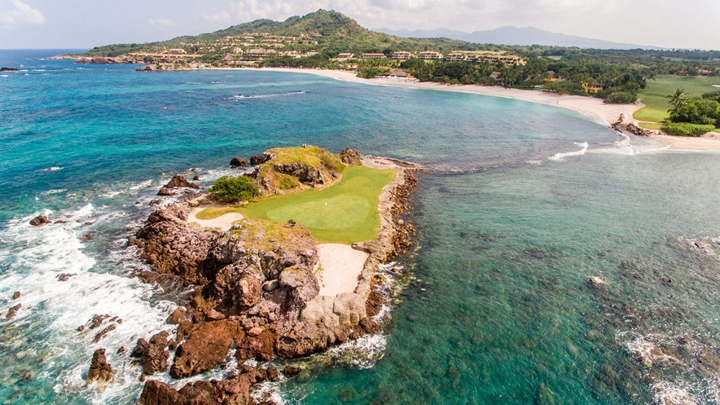
In the case of the Nuevo Vallarta Tourism Project, one of the few agreements reached by the original inhabitants of Corral de Risco with the developers of the project was that they were allowed access to the beach to continue with their fishing activities and small-scale tourism services. The company DINE, in charge of the construction of the Four Seasons Hotel in Punta Mita, also built a breakwater to stabilize currents and control beach erosion, in addition to separating access to the beach for the hotel and for local residents. This work, however, was carried out without adequate technical studies, as it did not take into account the rotation and marine currents, which caused erosion on the bay's beaches. The residents filed complaints against the company to resolve the problem, but the process has not been favorable to them. Environmental impacts have been increasing: erosion, obstructions, overexploitation of water supplies and destruction of aquifers for which the company has not been held responsible (Environmental Justice Atlas, 2022).
5/
SURF BREAKS AND PROTECTED AREAS
The General Law of Ecological Balance and Environmental Protection establishes that natural protected areas (NPA) aim to preserve the natural environments representative of the different biogeographic and ecological regions, and of the most fragile ecosystems, as well as their functions, with the purpose of ensuring the balance and continuity of evolutionary and ecological processes (art. 45).
In Mexico, the categories of NPAs are:
Biosphere reserves
National parks
Natural monuments
Natural resource protection areas
Flora and fauna protection areas
Sanctuaries
State parks and reserves, as well as other categories etablished by local legislation
Municipal ecological conservation areas, as well as other categories establishe by local legislation
Areas voluntarily set aside for conservation
For the purposes of wave and surf break protection in Mexico, the categories of flora and fauna protection areas, state parks and reserves, municipal ecological conservation zones and areas voluntarily set aside for conservation could be suitable for the protection of such zones. The other categories require the existence of biodiversity that is truly charismatic or fragile, that is categorized as endangered.
The NPA management programs that have federal jurisdiction define the zoning of the protected areas. It is recommended that, whenever possible, surf break zones be included in public use zones: those areas that present natural attractions for recreation and leisure activities, where it is possible to maintain concentrations of visitors, within the limits determined based on the carrying capacity of the ecosystems. In these zones, the construction of facilities for the development of support services for tourism, research and environmental monitoring, as well as environmental education, is allowed, congruent with the protection and management purposes of each natural protected area.
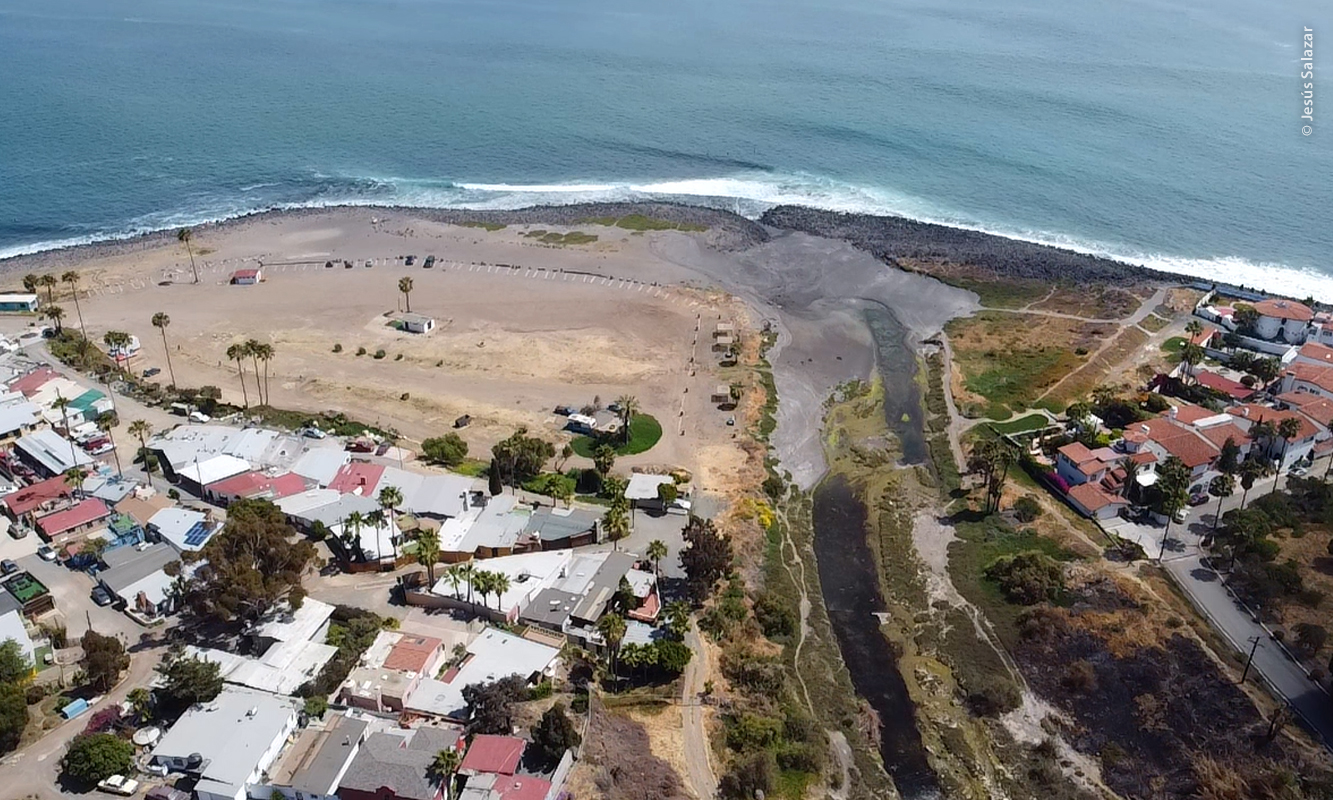
Decree 71 (September 17, 2021) declared the creation of the protected area of San Miguel Beach and Stream, Baja California, as a State Park. In its fifteenth paragraph, it states that the beach and the San Miguel creek are traditionally used by the local population and by national and foreign visitors for family activities, outdoor recreation, nature contemplation, educational activities and for surfing, both recreational and competitive of national and international level. It adds that the quality of the waves in this locality (in reference to the city of Ensenada, Baja California), on which the practice of this sport depends, is directly related to the conservation of the natural characteristics and the hydrology of the beach and San Miguel creek. These provide, naturally, the sediment, sand and rocks that maintain the profile of the coastline that gives rise to the waves. Photo: Jesús Zalazar.
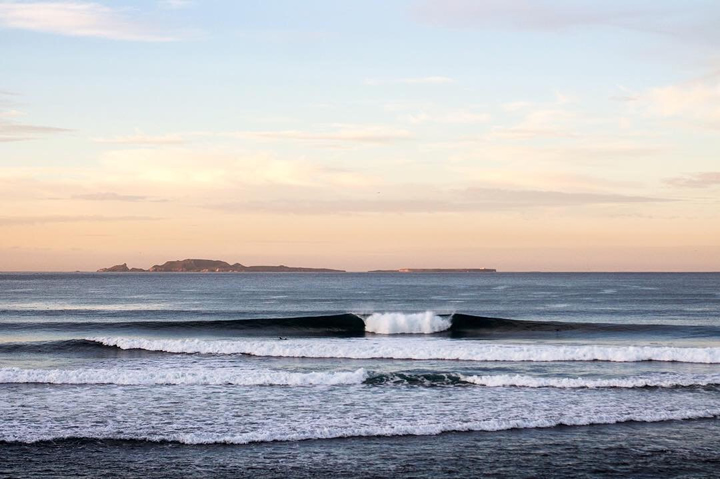
In 2016, the decree declaring the region known as Pacific Islands of the Baja California Peninsula a Biosphere Reserve was published, with a total area of 1,161,222.98 hectares. Within the surface area is the Todos Santos archipelago, made up of the Todos Santos Norte and Todos Santos Sur islands and eighteen islets, located 16.6 kilometers from Ensenada, Baja California, which in 2013 was declared a World Surfing Reserve Bahía de Todos Santos (Save The Waves Coalition, 2013). Although the management plan is still pending, organizations such as Save The Waves and Surfrider Foundation have been carrying out activities such as tournaments and surf championships to promote the value of the area's ecosystem services (environmental, social, economic, and cultural). In addition, they are advocating in public meetings that have been held so that the protected area's management program considers criteria for conservation of surf break zones, wave protection through zoning, and rules respecting the natural vocation of the archipelago. Photo: Jesús Zalazar.