HAWAI
In Hawaii, in general, the regulations do not expressly mention surf breaks. However, work has been done to identify national surf reserves and promote collaboration between different government agencies to protect them. Despite this, such protection does not yet have the status of law, and in practice has had little application.
Through current legislation, indirect mechanisms have been used to protect waves. This is the case of the Hawaii Coastal Zone Management Plan. By considering recreational activities as objects of protection, this could include surfing sites, including breakers, as protected areas. Also, certain environmental assessments have required mitigation of adverse impacts of some development projects in surf breaks, as ocurred in Kaapanali, Kahana and Kekaha.

HAWAI
1/
GENERAL RULES FOR THE PROTECTION OF BREAKERS
1.1. SURF RESERVES
Under Executive Order 10-07, Hawaii may identify surf reserves. The Hawaii Department of Land and Natural Resources (DLNR) is responsible for managing public lands, water resources, ocean waters, navigable streams, and coastal areas (except commercial harbors), and is therefore the authority responsible for recognizing surf as a property of the State of Hawaii. Thus, it can install signage to commemorate and identify surf reserves and help promote collaboration between different government agencies to protect them.
However, Executive Order 10-07 does not carry the weight of law, and the DLNR has expressed that it does not have the available funding or capacity to provide administrative support for a surf reserve program.
1.2. PRESERVATION OF HISTORIC AND CULTURAL PROPERTIES
The Hawaii Revised Statutes Chapter 6E (HRS 6E) focuses on the preservation of the State's historic and cultural properties. It could also be an effective vehicle for achieving recognition and protection of surfing sites. HRS 6E establishes a statewide registry to identify historic places. Although there are currently no surfing sites on the registry, these sites include potential underwater sites significant to the history or culture of the State and its communities, which could include protection of breakers.
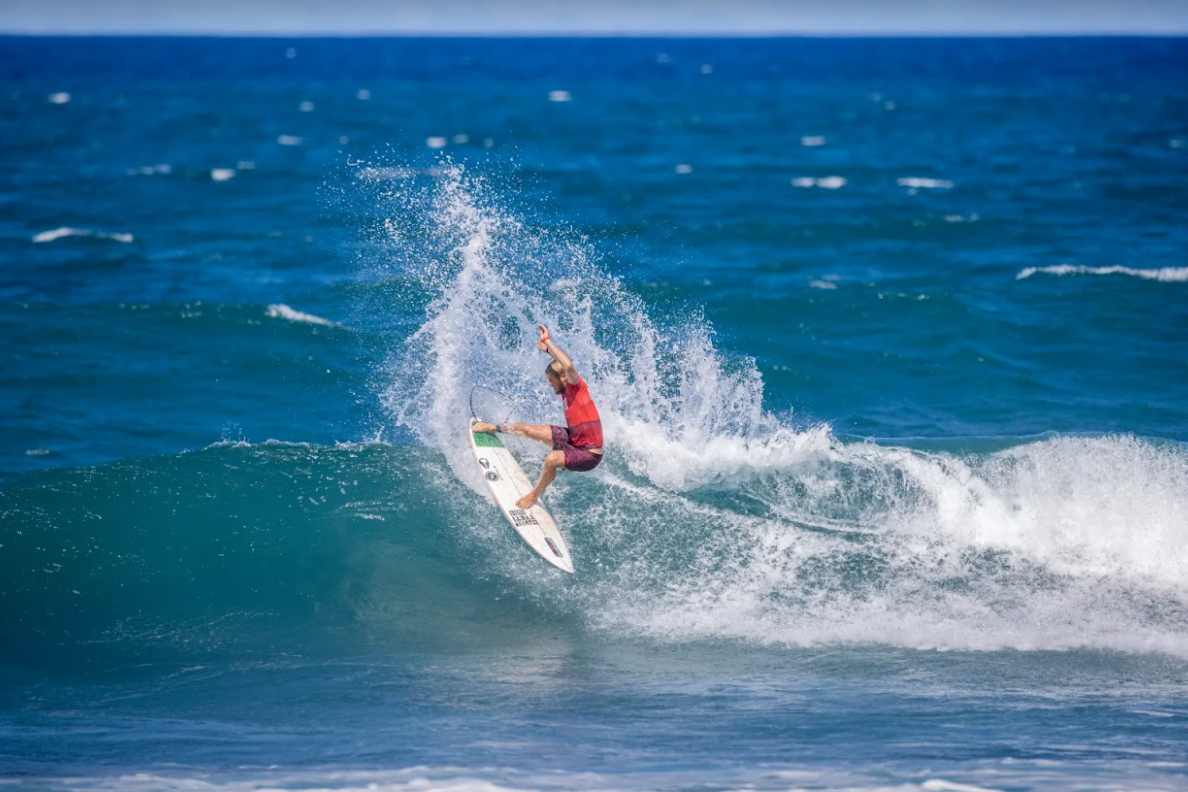
Hale'iwa, North Shore, recognized as a Historic, Cultural and Scenic District, primarily for its world-class surf break. Photo: Brent Bielmann.
2/
BREAKERS AND PROTECTED AREAS
Breakers can be indirectly protected through marine management areas (MMA) and marine protected areas (MPA), even though breakers are not explicitly referred to in the legal frameworks that regulate them.
The Aquatic Resources Division is responsible for MMAs and MPAs. MMAs are specific geographic areas designated by law or administrative rule for managing marine resources. MPAs are a subset of MMAs and focus on the protection, enhancement, and conservation of marine habitats and ecosystems.
To elevate the protection of breakers, it is essential to modify the rules in order to establish or manage MMAs and MPAs, so as to explicitly identify the breakers contained therein.
3/
BREAKERS IN MARINE-COASTAL ZONE MANAGEMENT PLANS
In Hawaii, breakers and waves have no specific legal status. However, the Hawaii Coastal Zone Management Program (CZM) allows for the protection of breakers by considering recreational activities among its protected resources. The CZM also aims to preserve valuable coastal ecosystems of biological importance, such as corals (whose bathymetry plays a key role in the formation and quality of Hawaii's idyllic waves).
The Office of Planning is the lead agency for coastal zone planning in the State and manages the CZM. One of the major components of the CZM is the Ocean Resources Management Plan (ORMP), a state-mandated plan intended to address coastal problems and issues that are not adequately addressed in existing laws and regulations.
The ORMP identifies management priorities that reflect the goals and policies of the CZM. The management priorities for 2020 were ocean economics, ocean cultural heritage, conflict resolution, and promoting community and place-based ocean management practices.
While breakers are not explicitly included within the CZM, the ORMP priorities indirectly support the protection of breakers that recognize the cultural and historical heritage of the ocean resources.
4/
ENVIRONMENTAL IMPACT ASSESSMENTS
In Hawaii, state laws and federal laws regulate the requirements for the preparation of environmental assessments. An important general rule is the Hawaii Environmental Policy Act, as it regulates the environmental assessment system. The purpose of this system is to ensure that environmental concerns are duly considered in decision-making along with economic and technical issues.
On the basis of observations and recommendations, the project is implemented with the least possible detrimental effect on the environment, or even that it is not implemented, if it could generate severe and unavoidable impacts. If the approving agency determines that the activity is not likely to have a significant impact, it will issue a "finding of no significant impact," and the activity may proceed.
In the case of environmental assessments that identify or recognize breakers within the environment affected by certain activities, mitigation measures are required for any adverse impacts on them, as well as alternative action options.
In general, except in the case of famous waves, potential impacts on waves from development projects are not expressly considered in environmental assessment processes. When breakers have been considered, historically they have been analyzed in a superficial manner.
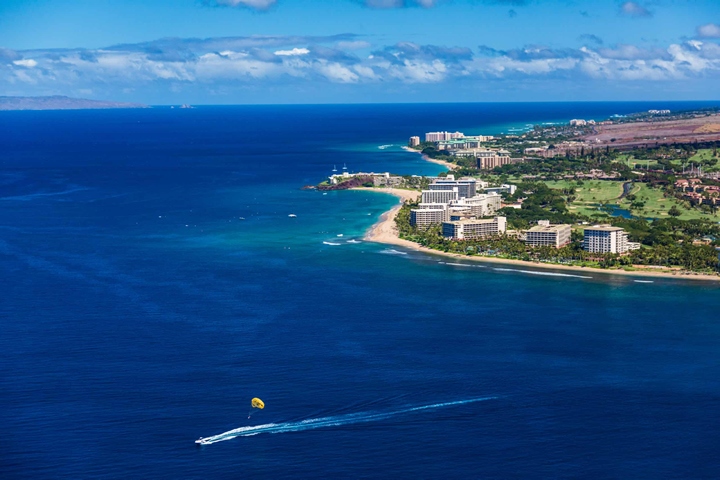
Restoration of Ka'anapali Beach, Maui, and berm improvement. The environmental assessment proposed minimizing disturbance to ocean recreation by accelerating the construction phase (to limit project duration) and utilizing sand that is highly compatible with existing sand (to minimize changes in wave patterns, currents, and nearshore bathymetry). Photo: Planneratheart.com.
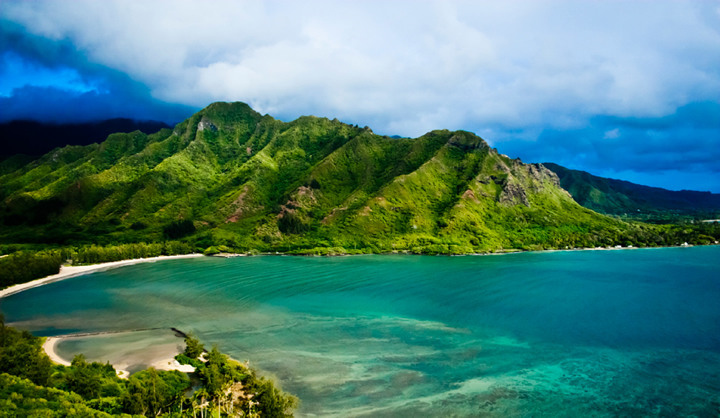
Kahana Bay erosion mitigation. The environmental assessment proposed planning dredging activities during the summer, when there are fewer waves, and effectively and comprehensively informing the community regarding the period when access to the bay would be limited. Photo: Hailey Minton.
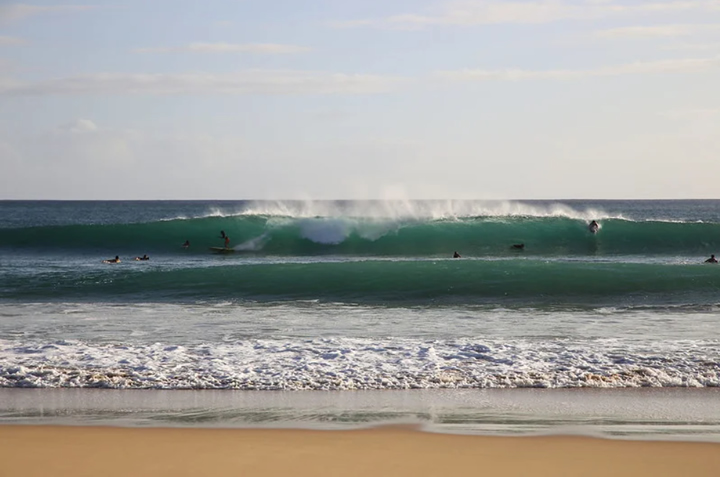
In 2017, the Surfrider Foundation and the Progressive Action Alliance of Hawai'i filed a lawsuit against the Board of Land and Natural Resources Hawai'i and Syngenta Hawai'i LLC. They were accused of failing to conduct an environmental assessment in accordance with Hawaiian environmental laws for a land use permit affecting a parcel of land in Kekaha, Waimea (Kona), Kauai. The plaintiffs noted that the project would have a significant impact on sensitive environmental resources, including waterways and nearshore waters. The parcel in question is adjacent to the shoreline that supports marine life and is also part of the zone state-designated surf zone known as the Targets. The judge ruled that Syngenta's use of State conservation lands is subject to Hawaii's environmental review laws. Therefore, until reviewed by a higher court, any new leases or expanded operations on state lands, in the conservation district or within the shoreline, must go through an environmental assessment. Photo: Clement Faydi.
5/
PUBLIC ACCESS
The Hawaii Revised Statutes Chapter 15 states that the absence of public access to Hawaii's shorelines constitutes an infringement of the fundamental right to free movement in public space, and access to and use of coastal recreational areas. The chapter seeks to guarantee the right of public access to the sea and to the coasts, as well as to transit along these throughout the State.
This chapter also establishes a maximum distance between public rights-of-way: it considers the interval necessary for reasonable access according to the topography of the site. However, this right of access to the shoreline is restricted to recreational use during daylight hours.
If public access is not provided, the HRS § 46-6.5 requires developers and subdividers to dedicate land for public access through an easement for pedestrian travel. New development projects are required to comply with these conditions to be approved.
6/
MARINE-COASTAL POLLUTION
There are multiple tools at the federal and state levels that can be used to both prevent and address pollution events affecting breakers.
At the federal level, under the Clean Water Act, he permit program helps address water pollution by regulating the point sources that discharge pollutants into waters of the United States.
At the state level, the Hawaii Coastal Zone Management Plan allows for the adoption of water quality standards and regulation of point and nonpoint sources of pollution to protect, and where possible, restore the recreational value of coastal waters.
HRS 343 and HAR 11-200 are regulations that help prevent pollution by establishing a system of environmental assessment that requires any potential source of water pollution, caused directly or indirectly by any project or activity, to be analyzed, mitigated, and justified when submitting an environmental assessment to the supervising agency for approval.
Likewise, the Hawaiian public trust doctrine provides legal action to enforce the recognized right of the people to have the waters protected for their use. This encompasses traditional Hawaiian rights, wildlife, maintenance of ecological balance, scenic beauty, and preservation of waters.
Finally, the designation of marine management areas (MMAs), which includes marine protected areas, influences human activities to reduce discharges and pollution.
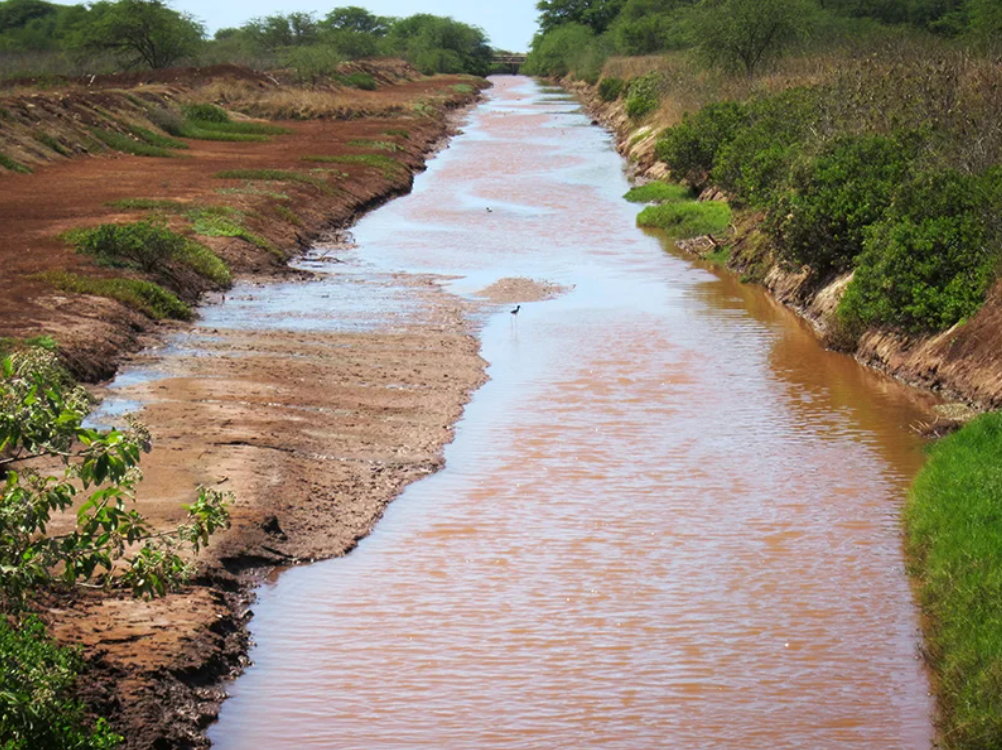
In recent years, the island of Kaua'i has tackled the discharge of agricultural pollutants into the ocean using, as key elements, the protection of affected breakers and their surrounding areas. Back in 2016, Earthjustice (on behalf of the Surfrider Foundation, Na Kia'i Kai and the Pesticide Action Network) sued the Hawaii Agribusiness Development Corporation for violating the Clean Water Act in an effort to protect Kaua'i's west side waters. The Corporation operated a 40-mile drainage ditch system, which discharged millions of gallons of polluted water into the ocean, thereby affecting people's health and fouling the water where people fished, swam, surfed and boated. In 2019, the plaintiffs won the lawsuit, and the corporation was required to implement a water quality monitoring program and best management practices to reduce pollution. Photo: Earthjustice.