INGLATERRA
In England there are no specific regulations for the protection of breakers. However, it is worth highlighting the importance of active advocacy for their conservation by various local community organizations, through a variety of actions.
Thus, in some cases, within the context of environmental impact assessment, wave modeling has been requested in the face of threats from infrastructure projects. In others, campaings have been carried out against marine-coastal pollution or regulations that prevent access to the breakers.

INGLATERRA
1/
INDIRECT PROTECTION TO SURF BREAKS: PROTECTED AREAS AND MARINE-COASTAL ACCESS LAW
In the United Kingdom there are no specific regulations for the protection of surf breaks. There are no direct mandates to institutions or authorities regarding them. However, there are laws such as the Marine and Coastal Access Act 2009, which plays a key role in the management of marine and coastal ecosystems.
The Marine and Coastal Access Act establishes a framework for integrated and sustainable management of marine and coastal areas in the UK. This aims to protect marine ecosystems, promote sustainable use of marine resources and ensure public access to the coast and the sea.
This law created a number of institutions and mechanisms for marine-coastal spatial planning, such as the Marine Management Organization (MMO), which reports to the Department for Environment, Food and Rural Affairs, and is responsible for the planning and management of marine areas in the UK. The MMO develops and adopts marine spatial plans that define locations and conditions for sustainable marine activities.
The Marine and Coastal Access Act also establishes the obligation to implement marine area management plans, which aims to protect and preserve important marine habitats and species, especially in areas designated as marine protected areas (MPA), also under the authority of the MMO.
Thus, the MMO assesses whether the activities it regulates are compatible with the conservation objectives of the MPAs and can establish management measures (including prohibitions or restrictions on activities) to protect habitats and species throughout the maritime territory, through ordinances of the MMO itself.
Except in emergencies, MMO decisions are based on rigorous analyses considering the best available evidence and include a period of public consultation. In most cases, a public hearing is held where the draft MPA assessment is presented to gather evidence and views from stakeholders to include their input. Currently, there are nine MMO ordinances in effect.
In addition to MPAs, in the UK there are also other arrangements to protect natural areas such as national parks, areas of outstanding natural beauty, nature reserves and sites of special scientific interest. Within some of these there are several surf breaks, which are protected because they are located within larger conservation areas.

The Pembrokeshire Coast National Park in Wales covers an extensive coastline with several surf breaks, including Whitesands Bay and Newgale, and where surf lessons are offered. Photo: academyofsurfing.com.
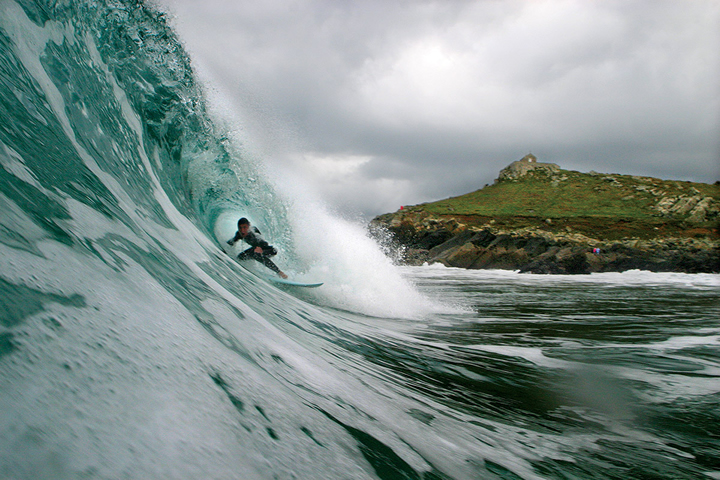
The St. Ives Bay Marine Conservation Area is an MPA on the Cornwall coast. It protects a marine area rich in biodiversity. There are numerous popular beaches and surf breaks in this area, including Porthmeor Beach (shown) and Gwithian Beach. Photo: Mike Newman.
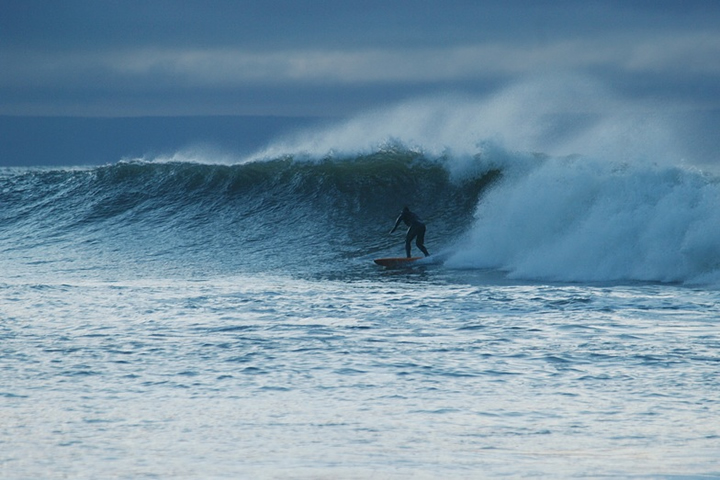
The Gower Area of Outstanding Natural Beauty, located in Wales, has beautiful beaches and surf breaks, such as Rhossili Bay and Langland Bay. An Area of Outstanding Natural Beauty can be used to preserve natural areas under the Rural Spaces and Rights of Way Act 2000. Photo: Debbie James.
2/
SURF BREAKS AND THE ENVIRONMENTAL IMPACT ASSESSMENT SYSTEM
The Environmental Impact Assessment Act of 2017 implements the European Union's Environmental Impact Assessment Directive and sets out the requirements and procedures for environmental impact assessment (EIA) on projects that may compromise the environment.
The Environmental Impact Assessment Act applies to a wide range of projects, including infrastructure projects, energy developments, mining, real estate developments, and projects that are considered of public interest. EIAs are carried out to identify, predict and evaluate the project's likely significant effects on the environment, and are used to inform decision-making and to minimize or mitigate negative impacts.
The law requires project developers to submit a detailed EIA report describing the potential effects of the project on the environment, which includes aspects such as air, water, flora, fauna, landscape and cultural heritage. In addition, public consultation is required during the EIA process to allow the public and interested parties to express their views and concerns about the project.
2.1. THE CASE OF NORTH DEVON
In the context of the EIA process for a proposed offshore wind farm 50 km off the coast of North Devon, the local community demanded that wave modelling and coastal geomorphology be carried out. While the need for and use of renewable energy was acknowledged and encouraged by the local community, they demanded that these elements be assessed, given the concern that the export cable would impact the coastline and waves at Saunton Sands, a world-renowned surf beach. As such, the local community used the consultation process established by White Cross, the company proposing the offshore wind farm, to raise their concerns and request the identification of any negative impacts that need to be removed before going ahead with the project.
While final results are pending, the local community’s demands have been successful, and wave modeling has been carried out to the specifications of members of the North Devon Local Governing Body and Plymouth University.
This appears to have set a precedent, as the Crown Estate, which was aware of the North Devon community's request, has been considering adopting the wave modeling measure in all marine planning along the southwest coast of England.

North Devon is the UK's only World Surfing Reserve, declared in 2022 by the Save The Waves Coalition. The World Surfing Reserve is governed by a local management council, made up of government agencies, environmental NGOs , local community groups, surf clubs, businesses and landowners, all united to work towards shared goals. Photo: thewaveshack.com.
3/
PUBLIC ACCESS
The Crown Estate owns virtually the entire seabed surrounding the UK up to 12 nautical miles (the territorial sea boundary). In most cases, the Crown property reaches to the high tide line, so the public can be on the "wet sand" of the beach, but there are some exceptions: Croyde beach (in the North Devon World Surfing Reserve) reaches the low tide line. The rest of the beach land is privately owned.
No UK regulation guarantees public access to waves. In England, rights-of-way are limited. However, the regulations vary from country to country.
In Wales, the Countryside and Rights of Way Act 2005 (CROW Act) is in force, which clearly identifies open access land in Wales. One fifth of Wales is listed as "access land," where the public has the right to access on foot. Under this Act, open access land includes open space (such as mountains and moorland) and "registered common land," i.e., land recorded in official registers as common land. It also includes areas of "dedicated land" to which landowners, such as Natural Resources Wales, allow free access. Natural Resources Wales has worked with landowners, tenants and other interested parties to produce accurate and clear maps of all open and registered common land available to the public.
In Scotland, the Land Reform Act 2003 introduced new rights for responsible public access to land and countryside. This right of access (responsible, non-motorized and recreational) allows access to inland land and waters throughout Scotland, with some exceptions (such as farmland or home gardens). Access rights are upheld and managed by local authorities and national parks authorities (called access authorities). In case of conflict, it is possible to refer the matter to the courts to determine judicially how access rights should be applied.
3.1. THE BROAD BENCH CASE
At Broad Bench, England, local activists campaigned to secure access to one of the best waves in the UK. In 2009, Surfers Against Sewage (SAS) organized the "Protect Our Waves" campaign, which consisted of a group paddle in partnership with the group Access to Broad Bench Association (ABBA). On International Surfing Day, surfers from across the country came together to paddle out from Kimmeridge Bay to call on the Ministry of Defence to allow surfers access to Broad Bench.
Kimmeridge Bay regularly produces some of the best waves in the UK, and surfing and windsurfing are very popular in this area. Broad Bench is a wave located in Kimmeridge Bay, described as one of the best in the UK. Unfortunately, it was located just outside the outer boundary of a Ministry of Defence firing range. The times and dates when access was allowed were insufficient and did not conform to seasonal swell patterns.
SAS and ABBA sought to ensure surfer access to Broad Bench without affecting the Ministry of Defence's use of the range by proposing to change the firing direction, to leave Broad Bench outside the range boundary. This was achieved by amending an ordinance that limited access to surfing and windsurfing in Kimmeridge Bay.
Dr Robin Canniford of the University of Exeter Business School said, "My studies have highlighted the social and economic benefits of waves, and Broad Bench is a good example. The wave benefits people from all walks of life and the tangible benefits are far reaching, far beyond the surfing community. We should learn from previous cases in the United States and Australia and embrace these valuable assets and not let the Ministry of Defense restrict their use." Today, the access problem is solved.

Surfers Against Sewage is one of the world's leading surfer activist’s organizations, leading campaigns against sewage and plastic pollution, and promoting the restoration of the oceans.
4/
MARINE POLLUTION
In the United Kingdom, coastal marine pollution is regulated by various regulations and laws that establish measures to prevent, control, and mitigate pollution in the marine environment.
4.1. TÉRMINOS GENERALES
The following are some of the main regulations governing marine pollution:
Environment Protection Act of 1990. This law establishes provisions for the protection and improvement of the environment, among which includes measures to prevent and control water pollution in general.
Pollution Control (Storage of Petroleum) Regulations of 2001. This law regulates the storage and handling of oils and hazardous substances to prevent marine pollution caused by spills and leaks of such substances.
Marine and Coastal Access Act of 2009. This law aims to protect and conserve the marine environment, and establishes measures to prevent marine pollution, regulate coastal activities, and promote the conservation of marine ecosystems.
The Control of Substances Hazardous to Health Regulations of 2002. This regulation controls the use, storage, handling, and discharge of chemical and hazardous substances, including those that can cause marine pollution.
4.2. BATHING WATER REGULATIONS

The UK is one of the worst European countries for coastal water quality due to the excessive amount of domestic sewage. The British organization Surfers Against Sewage has long been fighting against the marine pollution crisis resulting from sewage discharges, caused by an antiquated and inadequate sewage system, as well as insufficient regulations and enforcement. According to this organization, water companies have not invested in protecting the coastal and river environment. More information at SAS.
The Bathing Water Regulations 2013 is a legal instrument that defines waters suitable for bathing (recreational swimming and paddling) other than swimming pools . In December 2020, it was announced that a stretch of the River Wharfe in Ilkley, West Yorkshire, would become the first river bathing site to be added to the list, which until then included coastal sites and lakes.
Bathing waters are established in an annual list. The Department for Environment, Food and Rural Affairs, through the Environment Agency, checks the quality of bathing water in England and whether there are any pollution problems. It also sets water quality standards, publishes the results and annually classifies bathing waters into the categories "excellent", "good", "sufficient" or "poor".
Of the 419 bathing waters measured in England in 2022, these were the main results:
407 (97.1%) met at least the minimum standard of the regulations on bathing waters.
302 bathing waters (72.1%) met the excellent standard of the regulations.
12 bathing waters (2.9%) did not meet the minimum standard and were classified as poor.
ocal governments are required to display information at bathing waters to show water quality during the bathing season (May 15 to September 30).
4.3. ENVIRONMENTAL AGENCY
The Water Services Regulation Authority (OFWAT) regulates the economics of the water and sewerage sectors in England and Wales, but has no powers to hold privatized water companies to account.
The Environment Agency, under the Department for Environment, Food and Rural Affairs, has powers for the restoration of environmental damage. However, water quality problems are not considered illegal acts, but poor practices, so fines that would serve as effective deterrents are rarely imposed.
The government has said, with the new Environment Act (post Brexit), that it will address this problem; however, some specialists believe that it is not taking serious steps to deal with corporate malpractice.
South West Water is the privatized water and sewerage company in the jurisdiction of the North Devon World Surfing Reserve, as well as other areas of Devon, Cornwall, Somerset and Dorset. In 2023, the Environment Agency awarded South West Water the lowest environmental rating of the nine large privatized water and sewerage companies in England and Wales. The regulator criticized the regional monopoly for its poor performance, and stated that it had been "consistently unacceptable for the tenth consecutive year."